
 By
By How Countries Are Preparing for Super El Niño and What Baguio City Can Learn
Excerpt: Countries are preparing for water shortages, heat, fires, and severe weather as El Niño intensifies. Measures in Asia, Australia, and California offer practical lessons for Baguio’s water supply, public health, drainage, and emergency response.
Countries are preparing for the intensifying El Niño by conserving water, adjusting farming plans, strengthening early warnings, and testing emergency response systems. For Baguio City, these efforts offer useful examples of how to prepare before prolonged dry weather puts greater pressure on households and public services.
In its September 23, 2026 advisory, PAGASA reported that a strong El Niño was active in the tropical Pacific. Climate models indicated that it would intensify into a very strong event during the September–December 2026 season and persist through the first half of 2027. The agency warned of risks to water resources, agriculture, energy production, and public health.
What does “Super El Niño” mean?
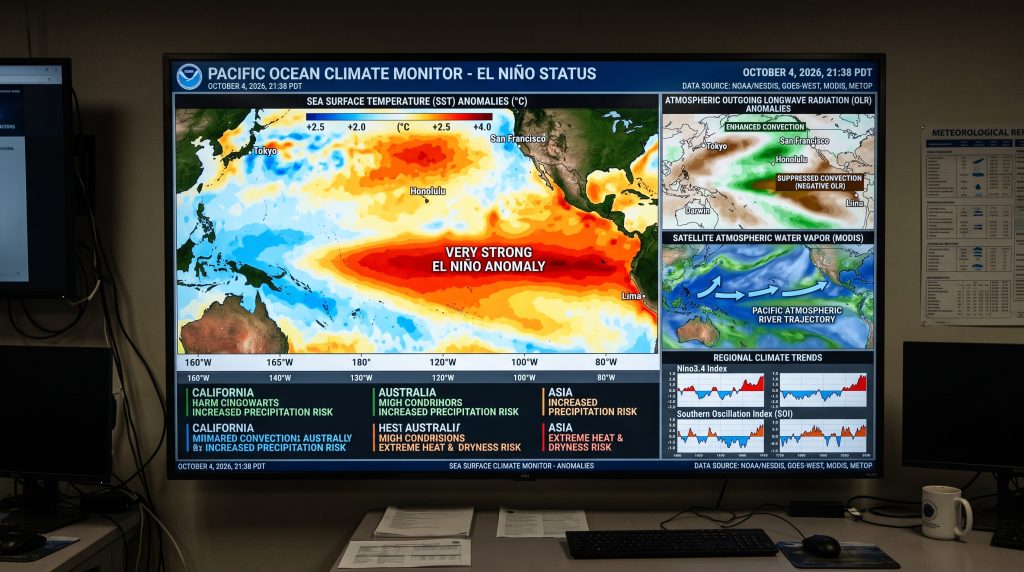
“Super El Niño” is a popular description rather than a category in the World Meteorological Organization’s operational classification system. WMO uses the categories weak, moderate, strong, and very strong. PAGASA’s September advisory uses “very strong” for the expected intensification.
El Niño involves unusually warm surface waters in the central and eastern equatorial Pacific, together with changes in atmospheric circulation. Its effects differ between countries and seasons. A stronger event does not mean every community will experience the same temperature increase or rainfall shortage.
For Baguio, local rainfall forecasts, water-source conditions, and health advisories are more useful for deciding when to act than the “super” label alone.
How countries and California are preparing
Thailand: Planning water use before supplies become critical
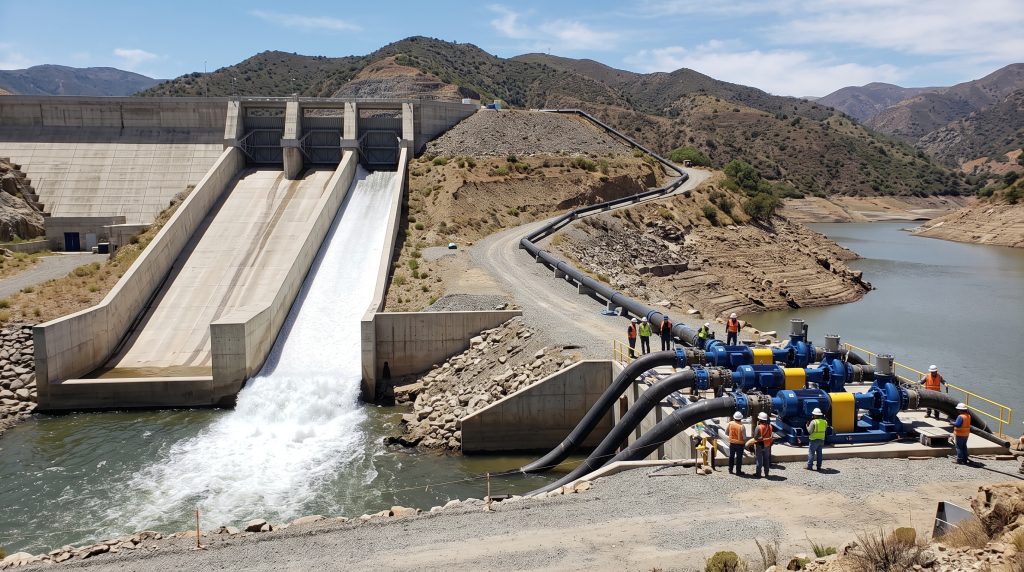
Thailand’s Royal Irrigation Department has announced measures that include planning water management two years ahead, improving storage during the rainy season, adjusting water releases, and matching crop plans to available reserves. It is also promoting reduced consumption, reuse, and recycling, while preparing pumps and water trucks for areas facing shortages.
A separate June 23 government update urged farmers to avoid a second round of off-season rice cultivation and consider crops that require less water or have shorter growing periods. These measures aim to reduce the risk of planting crops that available water supplies cannot sustain.
The lesson for Baguio is to estimate demand and available supply early, then adjust activities before emergency water deliveries become necessary.
Indonesia: Coordinating water supply and fire preparedness
Indonesia has combined drought preparations with forest and land fire prevention. A July government report outlined personnel training, logistical and equipment support for local governments, aerial patrols, water bombing, enforcement against burning, and continued weather monitoring. Authorities also urged local leaders to map water sources that could be used as conditions became drier.
Its meteorological agency, BMKG, reported expanded weather modification operations in priority areas. However, the agency described cloud seeding as a complementary measure that depends on suitable weather. When those conditions are absent, direct firefighting on the ground remains essential.
For Baguio, this points to the value of preparing water-source maps, firefighting access, and response arrangements together.
Singapore: Giving residents guidance on heat and smoke
Singapore’s National Environment Agency reported that the 28 government agencies in its Haze Task Force were ready to activate their action plans if transboundary smoke affected air quality. Its guidance directs residents to air-quality readings and health advisories when planning outdoor activities.
The agency also promotes heat-stress information through the Meteorological Service Singapore website and the myENV app. The approach connects monitoring with decisions people make each day, including when to exercise or undertake strenuous outdoor work.
Baguio’s geography and smoke sources differ from Singapore’s. The adaptable measure is the use of clear, locally relevant heat and air-quality information to guide schools, workers, event organizers, and households.
Malaysia: Bringing early warnings to national and local authorities
In a June 14 statement, Malaysia’s meteorological department said it had strengthened weather information and early warnings for government agencies and the public. It reported more than 70 briefings, meetings, and engagement activities on hot and dry weather at national, state, and district levels.
The department also provides forest and peatland fire-risk forecasts up to seven days ahead, issues haze forecasts, and supports cloud seeding when needed and when weather permits. Residents were advised to follow official updates, conserve water, and avoid open burning.
For Baguio, a similar approach could help barangays translate PAGASA forecasts into practical instructions for their communities.
Australia: Testing whether emergency plans will work together
Australia’s National Emergency Management Agency held a National Preparedness Summit on September 9–10, bringing together more than 300 participants from government, emergency services, industry, and nonprofit organizations ahead of the 2026–27 higher-risk weather season.
Participants conducted an exercise based on the seasonal outlook to test plans, decision-making, and coordination across sectors. Discussions also considered how disruptions can spread to essential services, supply chains, and communities.
Baguio could adapt this approach through exercises that test several problems at once, such as reduced water production, a power interruption affecting pumps, and a forest fire requiring additional water.
United States: California prepares for storms, flooding, and water storage
California’s preparations show why El Niño planning must account for different regional effects. While parts of Asia are preparing for hotter and drier conditions, the U.S. state is preparing for possible strong winter storms, flooding, and landslides. El Niño does not guarantee a wet winter or a particular storm.
On September 21, 2026, Governor Gavin Newsom proclaimed a state of emergency to strengthen preparedness. The announced actions include positioning sandbags, pumps, and other emergency equipment before severe weather; preparing highway traffic-control, road-closure, and snow-removal equipment; and readying the California National Guard for flood response, search and rescue, engineering, and logistics support.
The state is also supporting local flood, landslide, and debris-flow preparedness and expanding accessible, multilingual information on emergency alerts, evacuation readiness, and power outages.
California’s water planning addresses both flooding and future shortages. The Department of Water Resources says it is coordinating reservoir operations to preserve space for floodwater while storing water for possible drought conditions.
An October 2 announcement from the California Department of Food and Agriculture also scheduled an October 6 discussion on flood preparedness, flood diversions, and groundwater recharge. The announcement emphasized preparing to capture floodwater and replenish underground water supplies.
For Baguio, the applicable lessons are early equipment preparation, protection of roads and essential facilities, reliable public alerts, and safely designed rainwater capture and groundwater-recharge projects. California’s coastal and snow-related measures address hazards that differ from Baguio’s.
Why these lessons matter for Baguio
Baguio’s water system deserves particular attention. In a June 25 report, the Baguio Water District explained that the city relies heavily on groundwater and springs. Reduced rainfall can limit the natural replenishment of underground water sources, while higher consumption adds pressure. BWD’s reported roadmap includes source development, leak reduction, efficient water use, and watershed protection.
Conditions can improve temporarily without removing the need to prepare. A September 10 Philippine News Agency report said BWD’s water sources had significantly recovered following weeks of heavy rain, but the district continued to urge conservation ahead of increased demand and expected El Niño conditions.
The regional outlook also gives local authorities a reason to review their plans now. In a September 30 report, the Philippine Information Agency said the Cordillera disaster council was revisiting its El Niño action plan and urging local governments to review theirs. The cited outlook indicated that Cordillera could experience dry conditions by the end of November and a dry spell by the end of December 2026. These are forecasts that require continued monitoring.
How Baguio could adapt these measures
The following are some local adaptations drawn from the international examples. They are not announcements of newly approved city policies.
1. Set clear triggers for water-saving measures
Drawing from Thailand’s planning approach, BWD and the city could connect response measures to actual rainfall, groundwater levels, source production, and demand.
A staged plan could identify when to intensify conservation campaigns, reduce nonessential water use, activate additional delivery arrangements, and prioritize essential services. Publishing the triggers would help residents and businesses understand why measures are being introduced.
Barangay plans could also identify households that have limited storage or difficulty collecting water, so assistance reaches those most affected.
2. Expand rainwater use and repair leaks
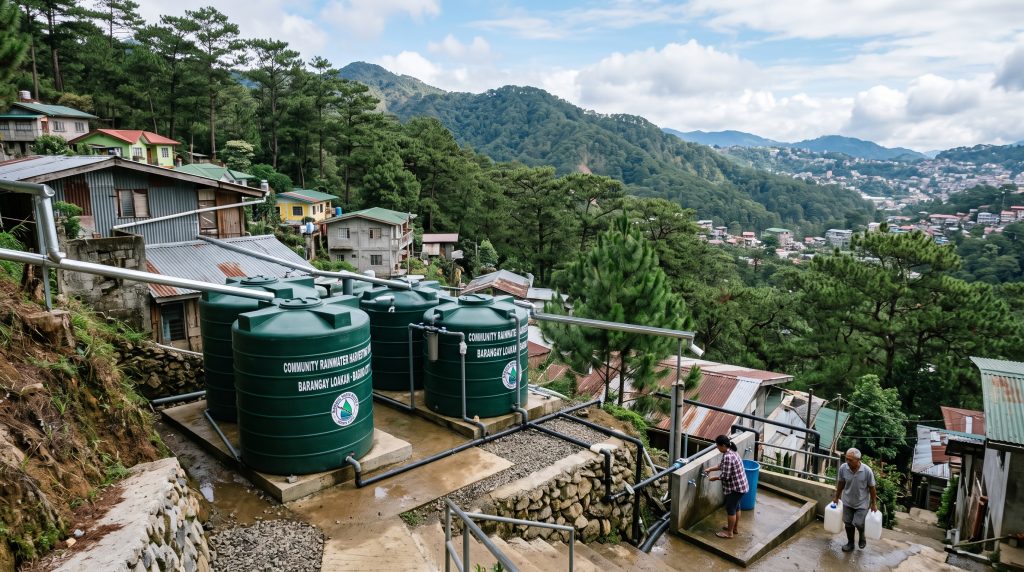
Baguio already has reported initiatives that can support this approach. A June 9 PIA report described barangay rainwater harvesting for watering plants and flushing toilets, alongside BWD’s preventive maintenance and repairs to leaking waterlines.
The city could build on these efforts by assessing public buildings, schools, and commercial establishments for appropriate rainwater collection systems. Captured water could substitute for treated water in suitable non-drinking uses.
Drinking water must remain subject to proper treatment and safety checks. Rainwater collection should also be planned around the strength, drainage, and maintenance needs of each building.
3. Connect heat and smoke warnings with practical action
Using the communication approaches of Singapore and Malaysia, Baguio could issue coordinated advisories that explain what current conditions mean for outdoor work, school activities, sports, and public events.
Suggested measures include access to drinking water, shaded rest areas, flexible schedules for strenuous tasks, and barangay checks on vulnerable residents.
Local health authorities have already reported El Niño preparations involving water-quality monitoring, disease surveillance, and cooling and hydration stations. These provide a basis for further coordination rather than starting a separate system.
4. Treat watershed protection as part of emergency planning
Indonesia’s preparations show why drought response and fire preparedness need to work together.
For Baguio, proposed actions include coordinated patrols, accessible fire-response routes, identified firefighting water points, and prompt reporting of smoke or burning near watersheds. Any vegetation management should be directed by the responsible environmental and fire authorities.
Cloud seeding may be considered by the appropriate agencies when technically suitable, but it should remain one part of a broader plan. BMKG’s explanation makes clear that suitable weather is necessary for such operations.
5. Coordinate food supply and business continuity
Thailand’s crop adjustments offer a lesson for regional cooperation. Baguio could work with Benguet municipalities, agriculture agencies, and market suppliers to monitor production concerns, delivery disruptions, and prices of basic goods.
Hospitals, schools, food businesses, hotels, and other establishments could review how they would maintain sanitation and essential operations during water interruptions. Plans could include storage needs, verified suppliers, delivery arrangements, and actions to reduce consumption.
For the city, monitoring supply and demand would support earlier intervention when pressure begins to build.
6. Test the response before an emergency
Following Australia’s example, Baguio could conduct an exercise involving the disaster office, BWD, health and environmental offices, fire services, barangays, schools, and businesses.
One scenario could involve several weeks of low rainfall, a pump outage, and a nearby forest fire. Participants would test who makes decisions, how water is allocated, how residents receive updates, and which facilities need assistance first.
Such an exercise could identify gaps in contact lists, equipment, delivery capacity, and responsibilities while there is still time to address them.
7. Prepare drainage, slopes, and roads alongside drought measures
California’s preparations offer a useful reminder that El Niño planning must also cover damaging rain.
Baguio could review drainage maintenance, inspect culverts and retaining structures, identify roads vulnerable to flooding or slope failure, and prepare equipment and traffic arrangements before severe weather arrives.
The city could also assess suitable sites for rainwater capture and groundwater recharge. Projects would need engineering, environmental, and water-quality review so that collecting runoff does not introduce contamination or worsen slope instability.
Public advisories could explain evacuation routes, road restrictions, and service interruptions in clear language, with barangays helping information reach residents who have limited internet access.
Heavy rain preparedness must continue
PAGASA’s September advisory emphasizes that El Niño does not eliminate heavy rainfall. Monsoon activity and tropical cyclones can still bring localized above-normal rain despite the broader tendency toward drier conditions.
Baguio should therefore continue maintaining drainage, monitoring hazardous slopes, and preparing evacuation arrangements alongside its drought measures.
For residents, the immediate contribution is practical: repair leaks, follow official supply advisories, keep stored water covered, and use verified safe water sources. Local health officials have warned that uncovered water containers can create mosquito breeding sites, while unsafe supplies can turn a shortage into a health emergency.
Footnotes and Sources
Official sources reviewed on October 5, 2026, Philippine time. Preparations announced earlier in the year are dated in the article. The proposed Baguio adaptations are recommendations based on these examples.
- PAGASA: Climate Advisory for “Very Strong” El Niño, September 23, 2026
- WMO: El Niño is forecast to intensify, July 3, 2026
- Thailand Government: Thailand prepares water plan as El Niño threatens lower rainfall, June 11, 2026
- Thailand Government: Government Steps Up Drought Response Measures to Mitigate El Niño Risks, June 23, 2026
- Indonesia Kemenko PMK: Cross-sector preparedness for drought and forest and land fires, July 1, 2026
- BMKG: Weather modification and cross-sector mitigation amid strong El Niño, July 30, 2026
- Singapore NEA: El Niño Conditions Expected in Second Half of 2026, with Warmer and Drier Weather in the Coming Months
- MET Malaysia: Preparedness for hot and dry weather, June 14, 2026 (PDF)
- Australia NEMA: Connected when it counts, September 18, 2026
- PIA: BWD lays out 10-year roadmap to ensure water supply, June 25, 2026
- PNA: Baguio water supply recovers after heavy rains; conservation urged, September 10, 2026
- PIA: RDRRMC to revisit El Niño action plan, September 30, 2026
- PIA: LGU Baguio calls for preparedness for El Niño, June 9, 2026
- PIA: El Niño poses public health threats; Baguio steps up preparedness, June 17, 2026
- Office of the Governor of California: State of emergency to bolster statewide El Niño preparedness, September 21, 2026
- California Department of Water Resources: California Water Watch, reservoir coordination for flood protection and water storage
- California Department of Food and Agriculture: October 2, 2026 announcement of the October 6 flood preparedness and groundwater recharge meeting
For more information, see our complete guide on List of Open Establishments, Operating Hours and Mode of Service.
Related: Super El Niño