

 By
By Why the Philippines Has Suspended Raw Ube Exports
Excerpt: The DA has suspended fresh ube exports to preserve planting materials, while an October clarification confirms its support for exporting processed ube products.
The Department of Agriculture (DA) has indefinitely suspended exports of fresh purple yam, or ube, to retain scarce planting materials and strengthen domestic production. The Bureau of Plant Industry (BPI) imposed the suspension in mid-August, according to the DA’s September 14, 2026 announcement.1
Agriculture Secretary Francisco P. Tiu Laurel Jr. clarified on October 6 that the restriction targets unprocessed and untreated raw ube that could be used for planting. The government continues to support processed ube exports.2
What the Suspension Covers
The September announcement covers fresh ube and propagative planting materials, whether shipments are intended for consumption, planting, or research. Plant quarantine stations were directed to stop issuing phytosanitary certificates for affected shipments.1
The measure is an interim safeguard pending policy and regulatory changes. No lifting date was provided.1
Why Planting Materials Matter
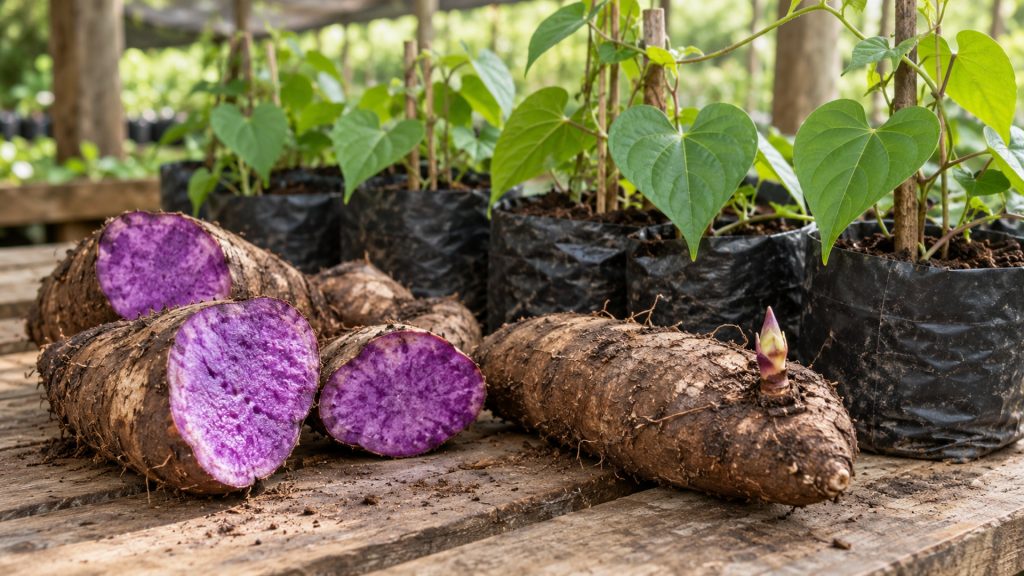
The DA said farmers lack sufficient quality planting materials to expand production. Keeping these materials in the Philippines is intended to build local capacity and prevent other countries from using Philippine varieties to compete with domestic producers.1
In the October clarification, Tiu Laurel explained that raw ube can be cut into pieces and planted, making the tuber itself a potential source of planting material.2
Processed Ube Exports Still Supported
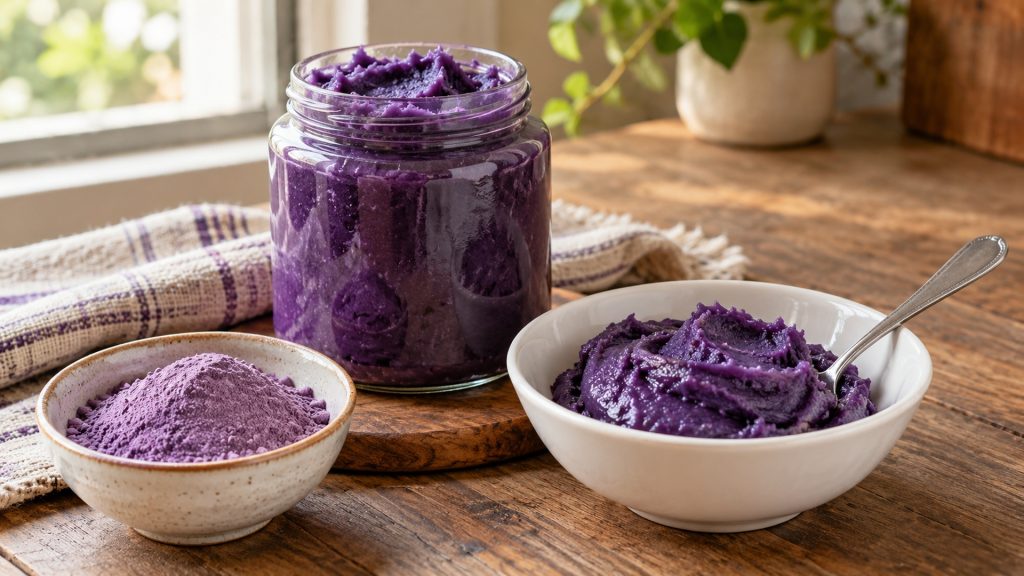
The restriction does not cover ube exports as a whole. Tiu Laurel reaffirmed support for exporting processed ube in whatever form.2
The DA’s September report identified powder, halaya, jam, and paste among products attracting growing demand.1 The distinction is between raw material that can be propagated and ube that has been processed.2
Building Supply for Future Exports
In its October 6 update, the DA said it was seeking ₱300 million for an initial production expansion, within a broader plan to add 1,000 hectares in the first year.2
The department plans to multiply planting materials through minisett propagation, tissue culture, and single-leaf nodal cuttings. Existing production areas will supply mother tubers, while selected farmers and cooperatives will serve as multiplier farms.2
The DA also reported genetic mapping of Philippine ube varieties by BPI and University of the Philippines Los Baños researchers, to support registration, variety protection, and export authenticity.1
Sources
- Department of Agriculture, September 14, 2026: DA indefinitely suspends raw ube exports to secure planting materials.
- Department of Agriculture, October 6, 2026: Government targets 1,000-hectare ube expansion for exports.