

 By
By LTFRB Confirms Increased Jeepney Fares Amid Fuel Crisis in Baguio City
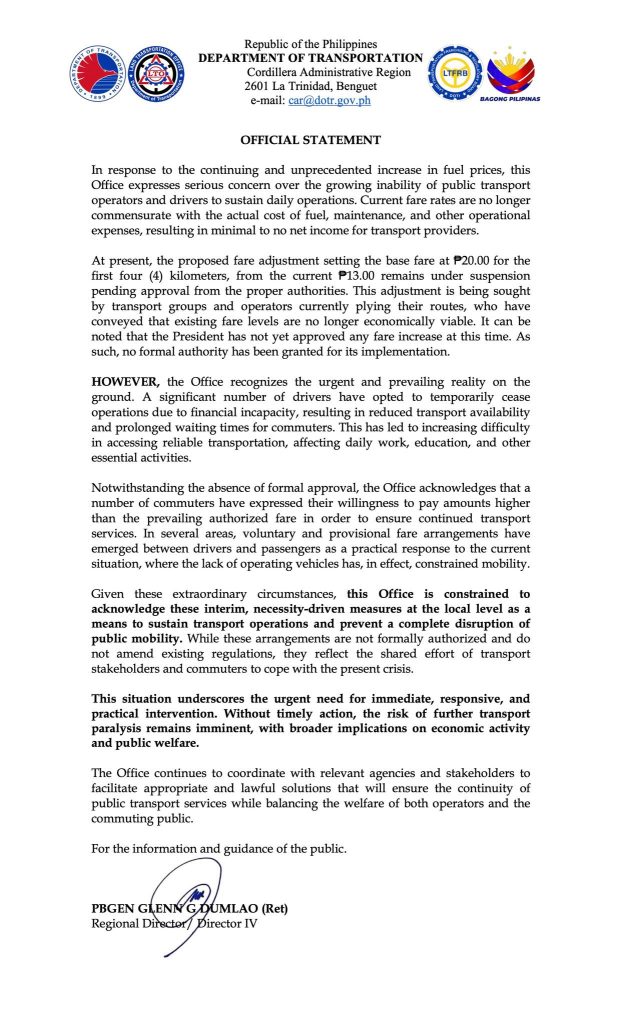
The Land Transportation Franchising and Regulatory Board (LTFRB) Cordillera Administrative Region has acknowledged that higher jeepney fares are already being charged in some areas through voluntary and provisional arrangements between drivers and passengers, as rising fuel prices continue to affect public transport operations.
While the official base fare remains at ₱13, the agency admitted it is “constrained to accept” these temporary arrangements on the ground.
Basahin sa Filipino dito
LTFRB: Accepting Temporary Fare Adjustments
In its statement, the LTFRB said it is constrained to accept interim, necessity-driven measures at the local level.
This means:
- The agency is recognizing and temporarily accepting higher fares in some areas
- These adjustments are driven by rising fuel costs and operational losses
- The situation is being treated as a short-term response to current conditions
₱13 Still Official, ₱20 Not Yet Approved
Despite this, the LTFRB clarified that:
- ₱13 remains the official base fare
- The proposed ₱20 fare is not yet approved
There is still no formal fare increase policy in place.
What Commuters Are Experiencing
On the ground, the impact is already being felt:
- Some drivers are charging higher fares
- Some commuters are agreeing to pay more.
- Fewer jeepneys are operating, leading to long lines and delays
These arrangements vary depending on location and demand.
A Temporary Measure Amid a Growing Crisis
The LTFRB’s position reflects the growing pressure on the transport sector.
By stating it is “constrained to accept” these conditions, the agency effectively acknowledges that:
- The current fare is no longer sustainable for some drivers
- Immediate strict enforcement may worsen the transport shortage
LTFRB-CAR Official Statement
Bottom Line
₱13 remains the official fare.
However, as fuel prices rise and jeepney supply drops, the LTFRB has acknowledged and is temporarily accepting higher fares already happening on the ground.
For more information, see our complete guide on List of Open Establishments, Operating Hours and Mode of Service.
“`html
Impact on Daily Commuters in Baguio City
The rising jeepney fares in Baguio City due to the fuel crisis have created a ripple effect on the daily lives of commuters, particularly students and workers who rely heavily on public transportation. While the official fare remains at ₱13, unofficial increases can create a financial strain for individuals on fixed budgets. Many students, who often travel daily to their schools and universities, may find themselves needing to allocate more of their monthly allowance towards transportation costs. Similarly, workers, particularly those in low-income jobs, could see a significant chunk of their earnings consumed by these fare hikes, leading to a decrease in disposable income. With Baguio City being a popular tourist destination, residents are concerned that these fare increases might deter visitors or affect the pricing of local goods and services, further complicating the economic landscape of the area. Understanding how these changes affect everyday lives is essential as the community navigates this challenging situation.
Alternative Transportation Solutions Amid Crisis
As the fuel crisis continues to escalate, residents and tourists in Baguio City are beginning to explore alternative transportation solutions to mitigate the impact of higher jeepney fares. Walking and biking have gained popularity, with the city’s cooler climate and scenic views providing an enjoyable backdrop for those who opt for these eco-friendly modes of transport. Additionally, local authorities are encouraged to promote bike lanes and walkable pathways to foster a culture of active transportation. Ride-sharing services and mobile taxi applications are also becoming favorable options for those seeking convenience and efficiency without the unpredictability of fare increases. Furthermore, the community can engage in carpooling initiatives to reduce travel costs collectively. As part of the city’s charm, the implementation of more sustainable transport solutions could not only alleviate the effects of the fuel price crisis but also enhance the overall travel experience for both locals and visitors alike.
“`