

 By
By Baguio Sets Healthier Food Standards: What Organizers and Caterers Need to Know
Excerpt: Baguio’s healthy food procurement policy sets nutrition standards for government meals, snacks, and drinks. Here is what the ordinance means for event organizers, caterers, and local food suppliers, alongside an October directive from DepEd Baguio.
Meals, snacks, and drinks procured or served by the Baguio City Government must meet nutrition standards under City Ordinance No. 27, Series of 2026, which establishes the city’s Healthy Public Food Procurement Policy. The measure promotes balanced meals, fresh ingredients, and healthier drinks while setting limits and restrictions on certain food items.
An official implementation step this October comes from the Schools Division of Baguio City. Division Memorandum No. 658, s. 2026, dated September 30 and released October 1, directs concerned offices and schools to adopt and apply the ordinance. It covers food planning, procurement, preparation, serving, and management for government-funded meetings, trainings, seminars, conferences, and similar functions.[1]
Who is covered by the policy?
The ordinance applies to Baguio City Government offices, departments, institutions, boards, councils, committees, and task forces. It also covers entities procuring or supplying food for the city, including food suppliers and concessionaires in facilities owned and managed by the local government.[2]
Other government and private institutions are encouraged to adopt the policy through their own issuances. Barangays are also encouraged to incorporate the nutrition standards into their procurement policies or appropriation ordinances.
Its coverage should therefore not be read as a general prohibition on what residents may buy for personal consumption or what every private restaurant may sell.
What changes on the menu?
The ordinance calls for varied, nutritionally balanced meals that combine staple foods, vegetables, fruit, and protein sources. All meals must include non-starchy vegetables, either within the main dish or as a separate dish. Freshly prepared food and whole ingredients are preferred.[2]
The annexes distinguish between recommended foods, foods to limit, and restricted foods. These categories matter when preparing a menu:
| Category | Examples in the standard meal and snack guidelines |
| Recommended | Rice, whole-grain bread, root crops, fish, legumes, lean meat, vegetables, fresh fruit, and water |
| Foods to limit | Fried rice, refined-flour bread, certain sweet biscuits and pastries, instant noodles, processed meats, and dishes with heavy dressings or sauces |
| Restricted | Chicharon, poultry skin, specified products made with partially hydrogenated oils, cream-filled cakes and doughnuts, canned fruit in heavy syrup, and listed sweetened or carbonated drinks |
The general guidelines also instruct users to avoid processed meats, instant noodles, fast food, deep-fried food, and certain high-sugar products. Caterers should consult all applicable annexes rather than treating the table above as a complete compliance checklist.
The ordinance is more specific than a blanket ban on all processed or packaged food. Product composition, preparation, the applicable food setting, and nutrition standards determine whether an item is appropriate.
Drinks and condiments also matter
Clean drinking water must be readily available. The standards identify options such as fresh fruit or vegetable juices without added sugar and unsweetened coffee or tea. In its beverage category, Annex B prohibits soft drinks, other sugar-sweetened beverages, and beverages containing artificial sweeteners.
The general guidelines favor natural herbs and spices over prepackaged seasoning mixes. They also direct organizers to avoid placing soy sauce, fish sauce, and other condiments on dining tables. For meetings and conferences, caterers must provide water dispensers, and purchases of bottled water should be avoided where possible.[2]
What healthier event meals can look like
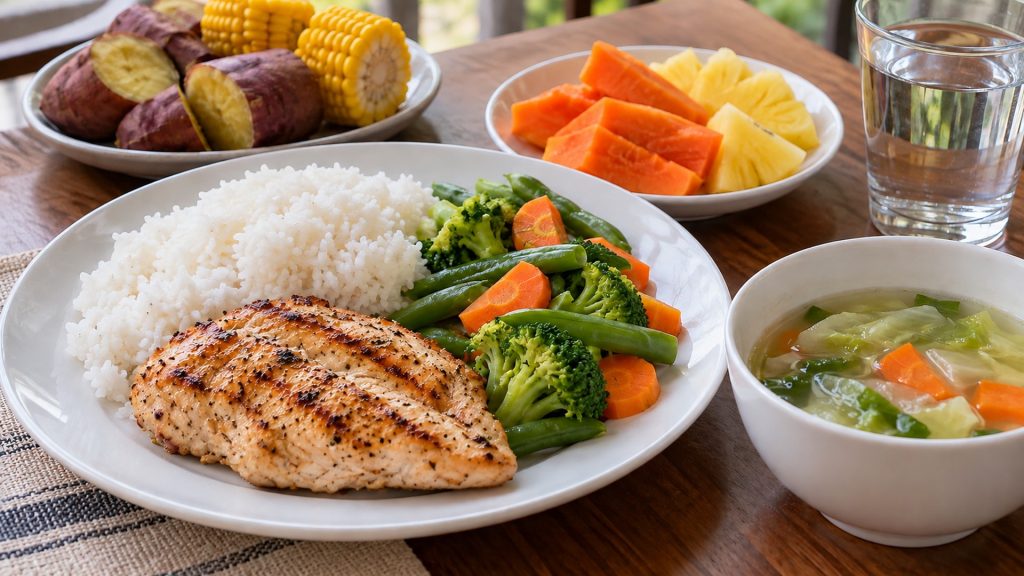
The CHSO proposed menu linked in the DepEd memorandum offers a range of familiar dishes. Examples include grilled chicken, chicken tinola with vegetables, steamed or baked fish, sautéed or steamed mixed vegetables, rice, and fresh seasonal fruit.[3]
Snack choices include whole-wheat sandwiches, fresh lumpia with light sauce, arroz caldo with egg, vegetable salads, and fresh fruit. Alternative snacks include boiled corn, boiled sweet potato, and hard-boiled eggs. The ordinance itself also provides a sample snack of boiled saba.[2][3]
The proposed menu allows substitutions based on ingredient availability, seasonal produce, dietary requirements, and budget, while maintaining nutritional value. It serves as a planning reference; naming a dish alone does not establish that its ingredients, portions, and preparation meet every applicable standard.
Preparing menus and sourcing ingredients
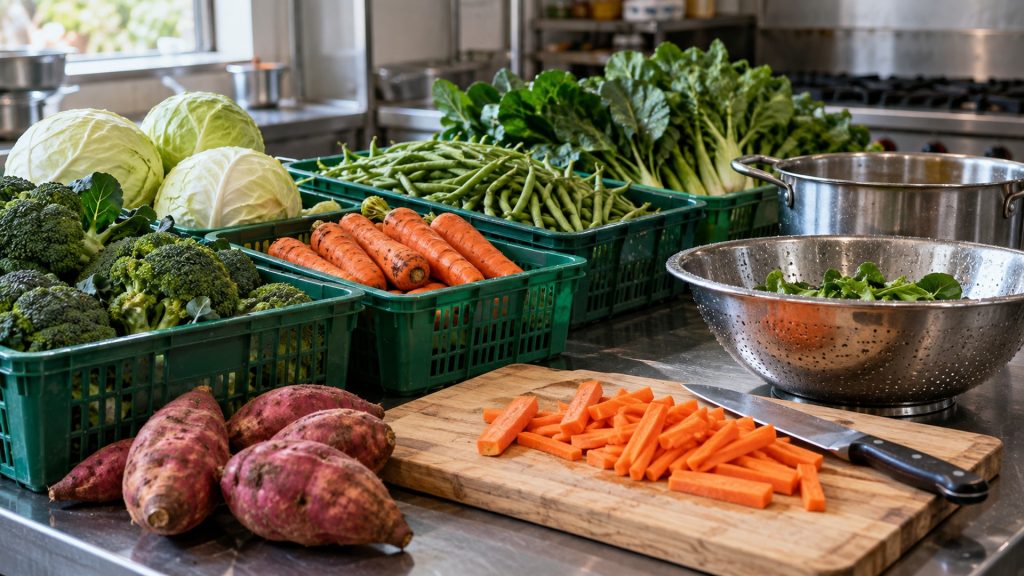
For government organizers, compliance begins with procurement planning. Food specifications in Project Procurement Management Plans and bidding documents must incorporate the nutrition standards. For existing plans, Section 7 calls for inclusion in subsequent plans and amendments to current plans where appropriate. Bidders must include a warranty of compliance in the required Omnibus Sworn Statement. Deliveries are subject to inspection, and the ordinance allows random sampling during contract implementation.[2]
The policy also promotes local sourcing. The City Veterinary and Agriculture Office is tasked with developing a program connecting government buyers, suppliers, and concessionaires with local farmers, fisherfolk, whole-food suppliers, and micro, small, and medium enterprises.
The ordinance permits direct purchases of agricultural and fishery products from accredited farmers’ and fisherfolk cooperatives and enterprises through the applicable negotiated procurement route under the Sagip Saka Act. This remains subject to procurement requirements.
Section 8 also promotes biodegradable, compostable, or reusable food packaging as part of sustainable procurement.[2]
For caterers preparing quotations, useful steps include reviewing the current CHSO menu, identifying seasonal ingredients, checking dietary needs, and confirming portions and preparation methods with the procuring office before finalizing an offer.
What support does the ordinance provide?
The Baguio City Nutrition Committee, chaired by the mayor, leads policy implementation and related decisions. The CHSO Nutrition Division is assigned to develop reference materials and tools, including checklists and scorecards, and provide free training on healthy food and meal preparation for public food suppliers. It must also train end-users on incorporating nutrition standards into procurement documents.[2]
These are mandated support functions. Caterers and interested suppliers should inquire with the Nutrition Division about current training arrangements, available materials, and the latest standards. Local sourcing inquiries may also be directed to the City Veterinary and Agriculture Office.
What is confirmed about the October implementation?
The DepEd memorandum released October 1 confirms a directive for concerned Baguio offices and schools to apply the policy. Section 19 of the ordinance provides that enforcement begins six months after its effectivity, while Section 22 ties effectivity to the Local Government Code.[1][2]
The ordinance states no fixed October enforcement date. The documents reviewed do not confirm completion of a citywide first phase or provide a current training registration schedule. A specific city advisory is needed to establish those details.
Sources
- Schools Division of Baguio City, Division Memorandum No. 658, s. 2026. Dated September 30, released and posted October 1, 2026. See PDF page 1. Official memorandum page.
- City of Baguio, Ordinance No. 27, Series of 2026, including Annexes A to D, officially attached to the DepEd memorandum. Passed March 16, 2026. Cross-checked against the complete 18-page ordinance supplied for this article. Relevant provisions: Sections 3, 6–15, 19, and 22; Annexes A to D. Official PDF containing the memorandum and ordinance.
- City Health Services Office, Proposed Menu for Healthy Public Food Procurement. Official reference linked in paragraph 3 of the DepEd memorandum. CHSO proposed menu.
Research checked October 6, 2026, Philippine time. No news or media outlet was used as a source for this article.
For more information, see our complete guide on List of Open Establishments, Operating Hours and Mode of Service.
Related: Baguio legal drinking age